Showing posts with label mountains. Show all posts

Saturday, 26 October 2019

Alpine Club Melbourne

YAASSS! 💓🏔

We're stoked to announce that the Alpenverein Melbourne / Alpine Club Melbourne is a thing now! Last year we started this adventure and this month we put the final pieces together. The club is registered, has an ABN and is officially part of the Austrian Alpine Club and therefore also the wider Club Arc Alpine and UIAA family. 


We've come a long way and it's always good to remember why we started this in the first place. Most of us are one way or the other a member of the Austrian Alpine Club since it comes with the awesome Alpenverein Worldwide Service (insurance for SAR, limited medical and unlimited repatriation).

"We're already paying anyway with no local benefits so let's make it an Australian thing."

Top of Ama Dablam with
Cho Oyu in the back
That was the initial idea and soon we realised there isn't a real Alpine Club either - something which needed to be changed :)

  • Having a true Melbournian Alpine Club encompassing all mountain activities
  • Providing a great insurance under the umbrella of the Austrian Alpine Club
  • Bringing adventurers together with local trips and events

The Alpenverein Melbourne is an all-ages, all-inclusive club which does a baby-hike in Plenty Gorge as well as expeditions to high altitude peaks. Now while you can do the baby-hike on short notice, you can't do the same for major peaks in the Himalayas, Alaska or the Andes. The club is committed to provide a pathway for mountaineers to grow and achieve their long-term goal.

Diving into the mountaineering world can be a bit daunting and especially since Australia is lacking the big mountains and glaciers although we do have some great training grounds. There's plenty of knowledge across the member so joining the club gives you an opportunity to tap into that.

Cheers
Anna, Emil & Philipp


Find out more at


Glossary

AVM - Alpenverein Melbourne - Alpine Club Melbourne

AAC (UK) - Austrian Alpine Club (UK)
AVS - Alpenverein Südtirol - South Tyrolean Alpine Club
CAA - Club Arc Alpine
DAV - Deutscher Alpenverein - German Alpine Club
FFCAM - Fédération française des clubs alpins et de montagne - French Federation of Alpine and Mountain Clubs
OeAV - Österreichischer Alpenverein - Austrian Alpine Club
SAC - Swiss Alpine Club

FAQs

Here are the updated FAQs about the Alpenverein Melbourne (AVM) from the previous blog-post. Please drop the club a line if you can't find the answer you're looking for: adventures@alpenverein.melbourne
  • Does the insurance cover trips here in Australia? 
    Yes. Absolutely. It's actually worldwide. You'll find more general information here. There's also a specific article which looks at insurances from an Australian point of view.
  • Is the insurance any different to the one of other sections of the Austrian Alpine Club (OeAV)?
    No - all sections and groups of the OeAV have the very same insurance. Insurance-wise it doesn't matter if you're a member of the AAC (UK), the Section Vienna or the Alpenverein Melbourne. 
  • Does the insurance include other leisure activities?
    Yes. All leisure activities in general are included. However there are some exclusions like paragliding, high altitude mountaineering (above 6000m) or arctic expeditions. 
  • Does the insurance cover backcountry, side country, off-piste, ski-touring or other out-of bonds adventures?
    Yes. All of them.
  • Why wasn't the AVM initiated as part of the German (DAV), French (FFCAM) or South Tyrolean (AVS) Alpine Club or any other alpine club?  
  • Simple: The Insurance of the Austrian Alpine Club (OeAV) is better for Australian based activities
  • Why is it Melbourne and not the Australian Alpine Club? 
    The Australian Alpine Club already exists but has a strong focus on snow sports. Mountaineering and Alpine Adventures aren't something the AAC does. On the other hand the names Alpine Club Melbourne or Alpenverein Melbourne have not been used prior to the AVM.
  • How does the AVM fit into the Victorian Club Landscape?
    The club has the mandate to establish and maintain relationships with similar or the same goals. While building our membership base we're also facilitation cross-club events and create new partnerships
  • Can I join without becoming an OeAV member?
    No. The Alpenverein Melbourne is a local group of the Alpenverein Österreich - Sektion Innsbruck. If you join the AVM you're joining the OeAV.
  • Can I join if I'm already member of another OeAV section?
    Unfortunately not. You'll need to switch to the Section Innsbruck in order to become a member of the AVM.
  • Is the Alpenverein Melbourne incorporated in Australia?Yes - we are registered with Consumer Affairs Victoria. The registration number is A0107950D. The ABN is 93 853 885 730
  • How is the Alpenverein Melbourne be structured?
    It's not much different from any other club you know. There are club rules, a committee and there are club events.
  • What is the structure within the OeAV?
    The OeAV is made out of 197 independent member-clubs - so-called sections. One of them is the Section Innsbruck. The AVM is a local group within Section Innsbruck. See the diagram below.
  • Why Innsbruck - why not any other section?
    This is the biggest section within the OeAV and we thought it might be hard getting this off the ground with smaller sections. We got and we still get a lot of support from Innsbruck so we think we made the right choice.
  • Why do we use the German "Alpenverein" instead of "Alpine Club"?
    We're simply sticking with the Corporate Design Manual of the club. Even the pommies with their British Section couldn't escape that. Besides we do have some German native speakers as members.
  • What do we do about the language barrier when we need to communicate with Austria?
    The current AVM Secretary is a German and the English of the guys in Austria is also pretty good.
  • How much does the Membership cost?
    The prices for 2020 are:
    Individual € 78
    Family € 132*
    Senior € 64
    *Children are free if all parents (single or couple) are members of the same sections and the children are insured too. 
  • For which time-frame do I sign up?
    In general you're singing up for the calendar year however there's a spring special every year. If you join after the 1st September, you'll get the remaining year for free and just pay for next year.
  • Are there any local club trips?
    Absolutely. They are listed on the club's website.
  • Where can I sign up?Right here - Registration Form - click on the link and on the upper right is the Union Jack to change the form to English.

Simplified Structure of the OeAV


Tuesday, 13 August 2019

Mont Blanc 2019

"Mountaineering in Europe is so ... civilised"
Once upon a time a Kiwi claimed New Zealand has the best mountain huts in the world. After I recovered from a hysterical attack of uncontrolled laughter, I got back up from the floor, wiped off the dust and asked that mistaken individual whether he had been to Europe. He had not. I explained to him that this what he calls a hut, Europeans call a bivy-box.   

Refuge du Goûter
Now if you've never climbed or hiked in Europe, I'm putting it straight out there: You're missing out. It's one of the better things since sliced bread because it comes with pastry and wine. My profound love for the mountains can be traced back over twenty years ago when I first rocked up at Les Houches to climb Mont Blanc. It was not only the first major peak I ever climbed, it was also a life-changing moment and the beginning of an ongoing passion - Mountaineering. I had no idea that a stupid idea brewed up over too many drinks in a pub on Christmas Eve 1998 will condemn me to this lifestyle. 

But let's step back a little bit. In general Australians who mountaineer tend to hop over the ditch or head straight for the Himalayas before even considering the Western Alps. On the surface that makes sense since the Kiwi Alps and Nepal are simply closer however there are a bunch of things which speak for climbing in Europe:
  • Accessibility
  • Information about routes and conditions 
  • Weather Stability
  • Rescue Services
  • On-mountain accommodation
  • Off-mountain activities
  • ... and of course: Food, Wine, Beer & Cheese. If you believe the Swiss, Germans, Austrians, French and Italians don't have these essentials covered, there's something seriously wrong with you.
Of course none of that crossed my mind back then in 1999 since I was living in Munich and the biggest mountain around was simply Mont Blanc. And this is why Dirk, Peter, Stefan and I decided to tackle this "little hill" without any climbing let alone mountaineering experience. Yeah, what could possibly go wrong? That's a whole story in itself but obviously the four of us are still alive and let me tell you this: It was a steep learning curve with a lot of close calls. However that didn't distract from the beauty of the mountains and the sense that we can and want to do this more often. Eventually we did a technical mountaineering course (TMC) and learned how to do these things without giving our parents a heart-attack.

Now instead of boring you with tales of our climbs last month ... and in the years before ... I'll give you a bunch helpful pointers to get cracking at your personal Mont Blanc and European alpine adventure.

Acclimatisation Hike

Refuge du Fond d'Aussois
You're in the Western French Alps. They are amazing so why not make use of a good hike to get your body used to a bit thinner air. Recently we found a gem you really do not want to miss: The Tour des Glaciers de la Vanoise. It's epic. We did a short circuit over four days with a baby and it was one of the best hikes I've done in my life. In fact I've done the Routeburn in perfect weather and this is simply better - I know this is a big call. The Tour isn't as crowded as the Tour du Mont Blanc, stays higher - always above 2000m - and you can pick a couple of variations which means you can adjust this to your schedule. If you're keen, you also have the option to sneak in a climb of the Dôme de l'Arpont 3599m but you need a bit of gear for this.

The huts are all fully catered which means you're only taking a small pack with some food for the day, change of clothes and sleeping liner. You can get a lunch box for the next day, beer, wine and sometimes a shower. Yeah I know - how civilised!

Now flip through a couple of pics and then I'll tell you a bit more about Chamonix and climbing.

Pointe de l'Échelle reflection


Above Sardières

Ruisseau de Pingon

Beer on tap @ Refuge de l'Arpont

Fun afternoon at the hut

Marmots - the little hearts of the mountains

Not so shy chamois

Blue butterflies

Looking at Monte Pelve

Gentiana aka Enzian

Grandpa Ibex
Do you feel like hopping on a plane yet? Great, let's get a bit more into the logistics:

Where to set up camp

If you want to climb around Mont Blanc, you got a couple of places where you can stay. There are some camp grounds, you can rent a chalet or simply check into one of the hotels or B&Bs. Chamonix, Les Houches, Argentière and Saint Gervais les Bains are all villages you should consider. Obviously Chamonix is the hub of all mountain activities but that shouldn't stop you from looking a bit further. There's also the Italian side of the mountain however that's more for advanced mountaineers unless you're aiming for Grand Paradiso which is one of the easiest 4000m peaks you can climb.

Now back to France our personal favourite is Saint Gervais les Bains which is the village where the Tramway du Mont Blanc starts its climb up the mountain. It has a fucking cute village square which hosts two markets per week and a free car park right next to it. There's a climbing wall hidden under the big bridge (think Burnley but lead-climbing), there are plenty of shops to get your cured meat and cheese kick, heaps of bistros & restaurants and the icing on the cake is the Boutique Hotel La Feline Blanche - again if you don't love Anne's hospitality there's something wrong with you. 

Ah yes ... the cat is actually a dog and his name is Bob ... but he fulfils the colour-requirement. 

Maison de la Montagne

The House of Dreams
This is special. Chamonix has little cute building called the House of the Mountains. It's basically the office of the local guide association ... however ... it's also a place of the volunteer organisation La Chamoniard to get the latest information about routes and conditions ... for free. Yes! This is a service supported by the local council to keep climbers safe. Are you listening New Zealand?!?!? You can just walk in there and have a lovely chat about your trip intentions with a professional guide or a Gendarme of the PGHM*. They are very forthcoming and provide you with a lot of insight, can advise alternative tours or simply point out some key issues. In the end these guys would also come to your rescue so they want you to be safe. Of course if you decide your objective would be best to achieve with a local guide, you can find one right here.
Also if you don't have a plan yet, the Office de Haute Montagne is filled with folders of topos, maps and 1:10000 model of the Mont Blanc Massive. Here you can dream up an adventure in no time - there are plenty to choose from and all of them are right at your finger tips. 

*Peloton de Gendarmerie de Haute Montagne - French High Altitude Police Rescue Squad. They are absolute professionals. If you get in trouble by not following their advice, you're not getting any sympathy.

Accessibility

The iconic gate at Aiguille du Midi 
You might have gotten the vibe so far: We are not purists. It doesn't need to be the raw wilderness with hideous approaches and self-imposed privations which are borderline to type III fun. While you can walk up the hill - Les Houches to the top of Mont Blanc bears more elevation change than Everest Base Camp to the summit - you can just take various ski lifts, trams or cable cars. In fact the peaks are so accessible that you can do a 4000m peak in a day. Most tours are just a two day trip which means within a week you can easily squeeze in three climbs e.g.
  • Aiguille du Tour 3540m
    Take the gondola and chair-lift in the afternoon and walk leisurely 2h to Albert 1er Hut. Early morning, summit and back down. Booking the hut is essential.
  • Mont Blanc du Tacul 4248m
    This is an easy day-trip from the Aiguille du Midi. Take the earliest cable car you can hop on (reserve one online or rock up at stupid o'clock), out through the iconic gate and off you go. You might need a second ice axe for the ice-fall.
  • Mont Blanc 4810m
    Take the first tram up to Nid d'Aigle, hike up to Refuge du Goûter and get your gear sorted. Very early morning, summit and back down. Again booking the hut is essential. You need one otherwise they will stop you at the Tête Rousse Glacier. The booking opens somewhere around April for the season and normally the hut is booked out within hours however, if you're flexible you can get in on a cancellation as well.
These three peaks would also be my recommendation for medium-level first time visitors. You can also do Mont Blanc du Tacul as a cool-down climb after Mont Blanc and if the ice-fall looks at you with its angry face, turn left and have a beer at the Refuge des Cosmiques instead. 

Bad Weather Alternatives

Unfortunately you can be washed or blown off the mountain and there are options beside going to the climbing gym or disappearing into the void of French cheese, wine and small-good shops. 
  • Les Thermes de Saint-Gervais is worth a trip but keep in mind boardies aren't allowed in French pools >> budgie-smugglers it is.
  • Check out the Musee Alpin de Chamonix or Musée Montagnard, Les Houches. The first one is about alpinism in general and the latter showcases mountain lifestyles of past times.
  • Obviously being a gear-slut, shopping is a great way to pass time and empty your bank account. You won't have any problems finding shops in Chamonix. Think Bogong Equipment on steroids plus all the big brands shops. In case you got wheels also check out Au Vieux Campeur in Sallanches or Decathlon in Passy. Pro-tip: maxing out you baggage allowance on your way to Europe is a mistake
    ... but maybe you should just wash your clothes, stay in the chalet and save some money.
This should give you a starting point and an idea where to begin your European mountaineering adventure. Now it's just about to find a spot in your calendar during the French climbing season, block it and book some flights.

Now if you're still wondering how our 1999 Mont Blanc adventure turned out, you're in luck. I recently recovered a trip report from the depth of the internet and translated it:

How not to start your Mountaineering Career

Yep. I'm also glad that I'm still around ...

Cheers and good luck 🍻
Philipp

This 2019 trip was the first overseas adventure of the Alpenverein Melbourne. If you're an mountaineer or alpine adventurer, this club might be the right thing for you. Check it out at www.alpenverein.melbourne

Friday, 12 October 2018

The Australian Snow Mystery

The 2018 snow season has been very good to us but unfortunately with spring being full steam ahead it's time to wrap it up. Last year was the best season since bomber of 2004 and although most of Australia is in drought this year topped 2017 a bit further. It started with a solid dump mid-June which laid the foundation for a combination of cold nights and barely any rain events to make it an awesome shred fest.

The Australian Snow Fields early last century


The last two winters were well above average as you can see in the chart. They were basically so good that you could almost believe the old myth that it snows more in the Australian Alps than in Switzerland.

But does it? Does more snow fall in the Australian Alps than in Switzerland? 

And where is this idea coming from? The origin of this myth seems to be this sentence:

"Where winter turns sun-baked valleys and ridges to snowfields larger than those of Switzerland"

It can be found in the 1957 documentary "Roof of Australia" which was shot right in the middle of the construction of the Snowy Mountains scheme (see below). You'll see a lot of NSW footage as well as a bit from the Victorian High Country.  It's fun to watch so have a look later. 

Now let's do a myth-busters on this claim. First of all we need to define snowfields. Obviously it's a field with snow on it but how big is it and where is it? 
  • Snowfield = Area above the elevation where you reasonably can expect snow in the middle of winter.
That's what I will use here. If you're a Victorian back-country lover, you hopefully won't disagree that snow most of the times starts above Camp Creek Gap. That's at 1100m so let's just use this for Australia. Yes it often snows down to 500m once a year however the snow barely stays there for long. On the other hand you quite often need to walk before hitting the snow-line but let me stick with this value. It only goes in Australia's favour. 

Which value do we use for Switzerland? If you image-search "Zurich Winter", you'll find heaps of images of a sugar-coated city. Yes it does snow there every winter and personally I've stumbled out of a Zurich club in winter just to fall over 1m of fresh powder. The average annual snow-fall is 85cm and there are 53.3 days with a closed snow cover ... but let's be a little bit conservative and use a higher elevation than the 400m of Zurich. 800m seems fair, right? 


1100m vs. 800m it is! Bring it on baby!


Oooops. Yeah I think you don't need to be a rocket-surgeon to realise the Swiss red is bigger than the Australian one. At the same scale the area is already much bigger so we don't need to go into the average accumulated snow fall per year because this would be very sad. E.g. Hotham (1800m) vs. Arosa (1840m) makes me cry ... it's 356cm vs. 840cm 😭 Therefore I'm calling this

MYTH BUSTED!

Ok. Some of you might want to argue it's about skiable snowfields. Watch some of Candide Thovex' videos and then we'll have another chat. 

Cheers and enjoy summer in the High Country ... or winter in the North!
Philipp


P.S.: Here's the above mentioned Roof of Australia documentary. For more old-school gems visit the National Film and Sound Archive of Australia or check out the Old School Skiing video of the National Alpine Museum. It's quite entertaining. 


Friday, 31 August 2018

Founding the Alpenverein Melbourne

The Idea - Why are we doing this?


Yes you read that correct: We want to found the Alpine Club Melbourne. The plan is to set it up as a local group (Ortsgruppe) within the Austrian Alpine Club (Alpenverein Österreich / OeAV) in order to benefit from a bigger network of European Alpine Clubs. We already reached out to the Section Innsbruck and got some positive feedback. What we now need is founding members and this is where you come in.


If you're a mountaineer, climber, backcountry skier or snowboarder, hiker or simply an adventurer, this might be right up your alleyway. Here are some advantages the Alpenverein Melbourne would bring and why you should join:

  • Insurance 
    This is probably the biggest draw-card. As an Austrian Alpine Club (OeAV) member you benefit from a great insurance. You'll find the details on the OeAV website.
  • Big Adventures 
    Trips to the big mountains are already on the cards. We have Mont Blanc booked in for next year and we intend to continue doing this.
  • Family Friendly 
    Getting children outside is one of the best things you can do. It fosters resilience and self-confidence. As parents we know this can be hard but it's much easier in a group. Don't believe us? Have a look at Emil's recent snow adventure.
  • Melbourne Based 
    Part of the Austrian Alpine Club tradition is to have regular social nights. Sounds good to us.
  • Safety Culture 
    Mountaineering safety culture differs between continental Europe and the Anglo-American mountaineering community. The aim is to tap into the latest safety research of the CAA - Club Arc Alpin - and make use of that here in Australia. 

We know there are other climbing and mountaineering clubs in Victoria but we don't see this as competition. Actually quite the opposite: We're already encouraging joined trips and cross-club activities. 

Now you want to join this adventure? Awesome and welcome aboard! Here is how it works:
  1. Join the Austrian Alpine Club (OeAV) - preferably the Section Innsbruck - if you haven't done so already. If you join after 1st September, you'll get the remainder of the year 2018 for free when paying your 2019 membership fee.
  2. Come back and enter your membership details into the webform
  3. We'll collect the details and once we got a bunch of members, we'll put or application forward to the committee of the Section Innsbruck.

That's it! We hope we sparked your interest and we'll have our local Alpine Club soon. In the meantime join us at the upcoming Mountaineering Social Night At the Clifton Hill Brewpub.

Cheers 🍻
The Valentines

2018 trip to the Dolomites


FAQs

Here are some potential questions you might have. Please drop us a line if you can't find the answer you're looking for: go@mountaineering.me
  • Does the insurance cover trips here in Australia? 
    Yes. Absolutely. It's actually worldwide.
  • What happens next? 
    We'll collect details throughout September and if we get to 15 -20 founding members, we'll submit the list to the committee of the Alpine Club - Section Innsbruck for consideration. If they accept our application we'll be the "Alpenverein Melbourne" as a Regional Group of the Alpine Club - Section Innsbruck.
  • Why not the German Alpine Club (DAV) or any other alpine club? 
    Simple: The Insurance of the OeAV is better for Australia based activities
  • Why not found the Australian Alpine Club? 
    It already exists but has a strong focus on snow sports. Mountaineering and Alpine Adventures aren't something the AAC does.
  • Can I join without becoming an OeAV member?
    No. The Alpenverein Melbourne will be a sub-group of the Alpenverein Österreich - Sektion Innsbruck. Technically you'll be joining the OeAV.
  • Can I join if I'm already member of another OeAV section?
    Yes! Just enter your membership number in the form.
  • Can I join at a later stage?
    You can but if we don't get the numbers this might not happen!
  • Will the Alpenverein Melbourne be incorporated in Australia?
    That isn't planned at this stage since we'll be a subgroup of an Austrian club. If the necessity arises, we can revisit this at a later stage.
  • How will the Alpenverein Melbourne be structured?
    This hasn't been decided yet. That's up to the members who found the group - meaning you :)
  • What would be the structure within the OeAV?
    The OeAV is made out of 197 independent member-clubs so-called sections. One of them is the Section Innsbruck. We'd be a sub-group with in  Alpine Club - Section Innsbruck. See the diagram below.
  • Why Innsbruck - why not any other section?
    This is the biggest section within the OeAV it might be hard getting this off the ground with smaller sections. On top of that we're already members of that section.
  • Why do we use the German "Alpenverein" instead of "Alpine Club"?
    We're simply sticking with the Corporate Design Manual of the club. Even the pommies with their British Section couldn't escape that. Besides we will have some German native speakers as members.
  • What do we do about the language barrier when we need to communicate with Austria?
    Luckily we got some German native speakers among us however the English of the guys in Austria is also pretty good.
  • How much does the Membership cost?
    Individuals € 57, Family € 101, Senior € 44 - All options are on the OeAV website. You can pay with credit card. There won't be additional fees for the local group here in Melbourne.
  • Will there be local club trips?
    Absolutely. That's one of the reasons why we're doing this. We'll also organise regular social nights.
  • What if I join the OeAV and the Alpenverein Melbourne doesn't get off the ground?
    You'll still have the benefits of the OeAV and that includes the insurance. Basically you won't lose anything. 

Simplified Structure of the OeAV


Thursday, 16 August 2018

Snow Camping with a Baby


Winterkind
Our recent facebook post (see below) about Emil's first overnight snow hike got a bit more attention than the usual blurbs. Now while it all looked fun and games, taking a baby into a sub-zero environment needs a bit of preparation and you have to meet a couple of prerequisites because enthusiasm and interest are no substitute for knowledge and experience.
  • You need to be well experienced with snow camping and by that I mean not just having car camped in the snow some years ago. A mountaineering background would be preferable. Learning the basics of anything while someone else's life depends on you is never a good idea.
  • Your baby needs to be 100% healthy. That means not even a cold or other "little things".
  • You comfortably co-sleep with your baby (We'll get to that later again).
As much as these little munchkins are entertaining, they are also lacking two fundamental abilities: The capability to properly regulate their body temperature and the ability to articulate what's wrong. An ill prepared summer camping trip might result in a cold wet night while the same thing for a winter trip brings you closer to death or beyond faster than you want - with or without a baby on board. Keep in mind kids are funny little creatures and in the end what worked for us, might not work for you.


Check the Forecast

Example of suitable forecasts
While snow camping and winter adventures can be fun in substandard weather, it's terrible with a baby. Precipitation of any kind is not good so you want perfect conditions. Be especially careful of temperatures slightly above zero degrees. Cold and wet conditions are already extremely challenging for adults and can become fatal for infants very fast. Add a little bit of wind and you'll face a disaster. Most hypothermia deaths happen above and not below zero degrees. 
Crispy and consistent minus degrees mean the air is dry which is easier to handle. Obviously this is a bit hard to find in Australia so avoid getting wet by having no rain at all. And don't run into the trap of just looking at the forecast for the summit. Snow on the mountain is cold rain in the valley.

Find a Suitable Location

Federation Hut
There are plenty of spaces in Australia - or wherever else - to have a snow adventure but if it's your first one with your little star, you need to pick a location where you can get out in case you need to. For example Cleve Cole Hut up on Mt Bogong or McAllister Springs are not a great idea unless you're aiming for a Darwin Award. On the other hand J.B. Plains, Federation Hut or Mt Stirling are all good ideas.
Having a sheltered and not exposed camp-site makes obviously sense as well. A hut with a stove as a backup doesn't hurt either.

Plan Your Hike & Cater for Breaks

You know that everything you do with a child takes longer and hiking is no exception. Plan your trip accordingly including breaks for bubby. In order to get him out of the elements we use a simple bothy-bag which is deployed in seconds. This works for feeds and nappy changes as well. By the way: Keep the wet-wipes warm in your inner pocket. It's good for your ears.
We prefer to carry the little on the front since he's far easier to monitor. Every year you can read horror stories of frost-bitten or dead babies in backpack child carriers so this isn't an option for us. Front-carrying also allows us more payload: Compared to a child carrier on the back, we safe 2-3 kg plus there's more room for bulky loads. Obviously whoever carries the child get's the light-weight gear like the sleeping bags and down-jackets.

Get Appropriate Clothing

This is pretty much key to the happiness of your offspring. Dressing a baby for the snow is not much different to your own wardrobe: Layer up and adjust to the conditions. The saying "cotton kills" is still valid so don't do that and make sure the head is covered since it can make up to 20% of a baby's body surface.
Hiking with an umbrella
 Admittedly it's a bit difficult to source non-cotton clothing (which has normally a red "flammable" tag in it) for little ones in Australia but it's not impossible. When you can get your hands on this stuff buy two or better three of everything since you need spare outfits in case the little one gets wet or you're facing a poonami. 
On a side note don't use chemical or other heat-packs because you're risking severe burns. Even in emergency situations paramedics won't use them on little children let alone babies.
Checking if Specki is still alert, happy and warm enough or too warm is a bit of a challenge and you absolutely need to do this regularly! We use a Garmin Tempe sensor in his sock which displays his peripheral temperature on the GPS watch and avoids unwrapping him. If that's fine, the core temperature is good as well. There are other devices available e.g. the nurofen FeverSmart but think about putting it on the extremities. The human body can sustain frostbite without being hypothermic.  
As with adults the top-layer needs to be water and wind-proof which again is challenging to source. We used a stuff-bag as a vapour barrier for the lower part of the body which worked very well. Of course the old trick of wearing a hard-shell jacket which is two sizes too big above everything, does it as well - just don't forget the feet. If you can't avoid the little drizzle, an umbrella is a great option to keep your precious dry ... as long as it's not windy and there aren't wet plants across the track.

Fine Tune Your Sleep System

Emil likes his sleeping bag
If you don't co-sleep with your baby, bin the whole idea of snow-camping. The baby-mouse needs your body heat overnight to keep toasty. There's also no point in going cheap because this is your fall-back position. If anything goes wrong, you'll pitch the tent and keep the little one warm inside your sleeping system. For one small-sized parent one roomy sleeping bag will do the trick. Our system consists of these components:
  • Base Layer - foam mats (Z-lite)
  • Mats -  two inflatable down mats (Exped WinterLite) connected with some straps
  • Sleeping bag - 0°C comfort rated bag at the bottom connected to a -25°C bag on top (Mont Expedition 8000 Std)
  • Tent - proper 4-season tent (Mont Epoch)
I know this isn't exactly cheap gear but it kept the three of us toasty warm at -8°C. You really need to get this right since you can't check on bubby all night. Again the little one still needs to be rugged up and wear a hat, hoodie or both. 
Please be aware that co-sleeping, the use of soft bedding (down sleeping bag) as well as wearing hats in bed are not recommended by various health professionals since they are connected to an increased rate of sleep accidents of babies. There is a lot of information available around SUDI which you should know anyway. We deliberately waited with our adventure until he was eight months because age is a factor as well. 

Have a Backup Plan

Having a break
There are so many things which can go wrong with a child which means you need to have a backup plan already in place before you might need it. This is why we chose a location where we could have walked out in any weather. In the car was a spare set of cloths and a sleeping bag. In general going with a group of experienced and trained people is safer than doing it on your own. In our group we had four Alpine SAR members, two medical practitioners as well as other people with substantial mountaineering experience. Emergency communication included mobile phones, satcom, PLBs and radios. You might think that's a bit overkill and we could have trimmed it down a bit but then again why not if we have access to these resources?

Never hesitate to cancel the whole thing and go or stay home. If things don't go to plan, it's safer to call it a day and try another time. 

The margin which allows errors to be corrected without consequences gets pretty slim once you're out with Wursti.

It's Worth It!

I know that "I'm painting the devil onto the wall" and it's not that bad. You might wonder why bother going through all this effort and that's a fair question. For us it already created great memories and hopefully in future one very resilient child which appreciates the great outdoors. That's worth every minute of preparation in our books 😁

Cheers and see you in the mountains!
Emil, Anna & Philipp 

P.S.: In Germany there's a saying that if the first winter after your birth is a strong one, you'll be a winter-child. It looks damn good for Emil 


Tuesday, 31 July 2018

Roping up in Australia?

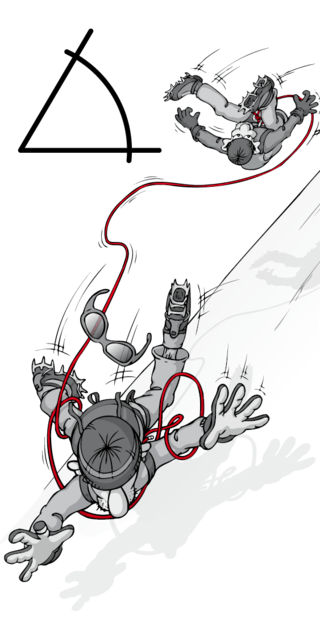
This season a thing which is a bit odd keeps popping up, bugging me and I can't let it slide (pun intended): Roping up in steep terrain where everyone in the party is moving. 

Anna and Emil roped up on the Glacier du Tour
First of all I have to clarify when I'm talking about roping up in this article,  I'm referring to the classic roping up for glacier travel: Simultaneous movement of a rope party with fixed distances between the members. This is different to belayed climbing where some sort of anchor is involved. Now how did this became a thing on the steep snowy and icy slopes of Australia?!? Let's take away the punch-line straight away: There is no real-life application of unbelayed, simultaneous and roped up movement in Australia ... unless you take Petey's almost valid point - because it looks cool on insta 📷😀

Before I go into the technical details let me introduce two mountaineers whose street-cred on a scale from one to ten is about godfather:
  • Pit Schubert *1935
    He is an aerospace engineer, the founder and former head of the safety commission of the German Alpine Club, Previous president of the safety commission of the UIAA and one of the very few people who made it into the Messner's Rock & Ice Stars hall of fame.
  • Gottlieb Braun-Elwert *1949 ✝2008
    Rock and Ice Stars
    Messner Mountain Museum Bozen

    He studied at the TU München and became a nuclear physicist before getting his IFMGA Mountain & Ski Guide certification and moving to New Zealand. 
Yes you're reading that absolutely right between the lines. Trying to argue against their scientific research is as smart as arguing climate change doesn't exist. You can do that, but if we have to evaluate how smart it is on a scale from one to ten ... you get the idea.

Roping Up

When do we rope up? Let's have a look at the safety recommendation of the Club Arc Alpin which is the umbrella organisation of the German, Austrian, Swiss, South Tyrolean, French, Italian, Slovenian and Liechtensteiner Alpine Clubs. Phew that's a lot of clubs!

"Rope up for glaciers, belay when the consequences of a fall are serious"
 - Recommendations "Safety on Alpine tours" (2015)

Obviously on glaciers roping up make sense because we don't have steep terrain and if one member of the rope party falls into the crevasse, the rope cuts into the lip and creates friction. If we did the right thing and added breaking knots, it creates even more friction and that should be enough for us to arrest the fall. Happy Days 🌞 


Typical Alpine Tour - OeAV Cardfolder Hochtouren
To understand where the roping up comes from we need to dig a bit deeper. There are some  points which you want to check on a a typical alpine tour (Source: OeAV Cardfolder Hochtouren):
  • Start at night (a) Explore at least a part of the route which you have to master in the dark, already the day before
  • Moraine and glacier approach (b) Watch out for icy spots in the morning, especially when crossing glacial streams. Due to the increase of temperature over the day, glacial creeks can increase and can be difficult to pass on the way back.
  • Before stepping onto the glacier (c) Find a comfortable and safe location to rope up. How is the surface? Blank ice, hard packed or soft wet snow? The answer decides whether we start with crampons from start or put them on later - in any case, the need to be on at the right time! Use this break to have a drink, eat and follow the call of nature.
  • On the glacier (d) Evade zones with crevasses wherever possible. Choose a path across and not parallel to the crevasses. If this is not possible, walk staggered. Use suitable places for breaks, ideally on rock islands. If you have breaks on the glacier everyone stays roped up and keep the distances. Pay special attention to terrain steps which will have increased number of crevasses.
  • Serac-zones The areas under ice towers and hanging glaciers are dangerous. Pass them quickly if you can not avoid them.
  • Terrain with increased risk of falling In steep snow and ice flanks as well as in steep rock passages there is risk of slipping and falling for the entire rope party! In this area the rope party on a long rope ends. These passages will be passed depending on the skill of the participants: 
    • rope free (e) 
    • or secured at fixed points (f)
  • Summit. Use the good overview to plan your descent e.g. check the location of crevasse zones. Stick to your schedule and observe the weather as well as temperature (glacier swamp!)
Slowly it should dawn on us why people rope up on steep slopes as well: It's convenient. You just crossed the glacier, stepped across the Bergschrund and your party is on the way to the summit. Although being roped-up isn't beneficial anymore - quite the opposite - it is a convenient way to carry the rope and unfortunately that image has been burned into our head for ages. Instead of choosing the safe options (e) or (f) we've seen or learned the unsafe behaviour of remaining roped up without belay. Being roped up is associated with safe although science doesn't support this in every situation.

Mitreißunfall

German noun - accident that occurred because a party was roped up and the whole rope party fell. 

© Georg Sojer
Yes. We Germans have a word for that. There are a lot of opinions out there which are more based on gut-feelings or anecdotal evidence however the laws of physics don't care what you think.

"The laws of physics are independent of your experience and your guiding qualification."
- Gottlieb Braun-Elwert


Lucky for us Pit and Gottlieb care about physics so much, that they did scientific experiments and we can benefit from that. We just need to listen. I won't get into the deep end of the scientific details. You can read up on it yourself; I've provided the links at the end. However the first research about slip and slides of rope parties on steep slopes has been published as early as 1982 (!) At that time I was four years old and probably annoying my mum by asking for ice-cream instead of handling ice-axes. You would think over three decades are enough for mountaineers to take on well founded safety advice but to everyone's frustration that's not the case.

Safety and Risk on Rock and Ice - Volume One - Pit Schubert
Bergverlag Rother - 9th Edition 2016 (1st Edition 1982)

This is it. That's the book which should have changed our behaviour. Back then Pit demonstrated that on a hard frozen 25° slope it's almost impossible for a rope party to hold a fall of a falling member. When they start sliding down, recovering by synchronised self-arrest falls under wishful thinking. 

"For unguided parties there is only one way: either belay with fixed belays or take the rope off."
- Gottlieb Braun-Elwerts - Moving on a rope June 2007

Years later Gottlieb revisited this topic and published a very elaborate slide deck which unsurprisingly came to the same conclusion because science bitches! You can download the slides and other interesting articles from the website of Alpine Recreation.

Short Roping

What about short roping? This technique requires years of training and experience to master and is better left to the professionals. It comes with various risks for the guide and has substantial limitations. Basically in moderate terrain it can only avoid a slip becoming a full scale fall. The protection is fairly limited and more of a psychological than a physical nature. Again you'll find a lot of information on the site of Alpine Recreation.

Probability of an experienced guide falling with just one client depending on slope angle and snow conditions. Relatively safe zones are marked in green. (Gottlieb Braun-Elwert - Moving on a rope)
The above graphs shows safe zones based on the assumption the downhill person slips and slides in a rope party of two. If you have more people on the rope, the leader is inexperienced and / or the uphill person falls, the red area gets much bigger.

Recommendations & Conclusion

Australia has a substantial lack of glaciers and therefore the main reason for roping up - protection against crevasse falls - does not exist. If you come across hard packed icy and steep slopes e.g. Eskdale Spur or Mt Buller Westface, you have to make a choice:
  • Walk without rope (and self-arrest yourself when you fall)
  • Use a gliding belay
  • Or set-up a fixed belay
Since belay means anchor, you should brush-up your skills and knowledge about snow-anchors. Learning techniques like teleferique or gliding belay is good idea as well. There's plenty of information out there. Anyway - let's wrap this up with a simple formula:

Always use a rope with anchors in the Australian backcountry

Cheers and see you in the mountains 🍻🏔
Philipp
MSc Mechancial Engineering TU München & VCC Safety Officer

P.S.: Of course if you're training for an oversea's adventure and don't use the rope in anger, rope up as much as you like and get kinky ... but please do it only on flat terrain or slightly angled slopes.


References:


Thursday, 7 June 2018

Winter 2018 - Season Schedule

Welcome to the Winter of 2018 dear Backcountry Lovers! 

Winter is just a couple of days old and the chilly weather has already settled in. Yes last year was an epic opening of a season with an early dump of snow (see pics at the bottom) however the Grasshopper has released the June outlook and it's not that bad: "So, on the whole, we’re in for a decent season." Wahoo!

Now let's have a look and check out the upcoming trips of the coming months. This year might get a bit crowded in the Victorian High Country since both the Melbourne Uni Mountaineering Club (MUMC) as well as the Australian section of the New Zealand Alpine Club (NZAC) are ramping up their activities again. I think it's great that we have a solid base of clubs venturing into the mountains. Cheers to all the trip-leaders who make that happen!  Here is the selection of upcoming club-trips🌌 with a special mark 🌟 where you can expect a rock-star appearance by a Mountaineering Melbourne member 😀
  • 26. June 🌟 VCC Mountaineering Briefing (Great Northern Hotel Carlton)
  • 29.June-1. July 🌌 MUMC Feathertop Trip
  • 7. July 🌌 MUMC Buller West Ridge
  • 7.-15. July 🌌 ROC Mt Buller to Feathertop
  • 14./15. July 🌟 VCC Mountain Weekend (location TBA)
  • 21. July 🌌 NZAC Buller West Ridge
  • 28./29. July 🌟 BSAR Steep Snow & Ice Training Diamantina Hut/Razorback
  • 4./5. August 🌌 YHA Mt Feathertop Snow Walk
  • 11./12. August 🌟 VCC Winter Camp (Mt. Feathertop - THE event of the year)
  • 17.-19. August 🌌 Alpine SAR Training (The Bluff)
  • 17.-19. August 🌌 MUMC Bogong Skiing
  • 25. August 🌌 YHA Buller West Ridge
  • 25./26. August 🌟 VCC Mountain Weekend (location TBA)
  • 25./26. August 🌌 NZAC Feathertop Trip
  • 25./26. August 🌌 MUMC Feathertop Trip
On top of that you'll have all the other usual suspects like Adrian or the girls and boys from the Mt Bogong Club crowding the slopes. 

Now sharpen these crampons, give those skis a service and have your gear ready when the snow hits the ground. Enjoy the season!

Cheers 🏂⛄ 
Philipp

Mt. Buller last year (3rd June 2017)


Tuesday, 1 August 2017

Seven Mountaineering Lies

I recently stumbled upon this funny piece and I don't want to withhold it from you. Lucky for you, I can read Bavarian so here's the English translation.

Translated from the Bavarian original "Sieben Berglügen" written by Stefan Frühbeis

1 "Almost there"

If you hear the following sentence from the mouth of your local climber: "Almost there!" - then you should be very suspicious. "Almost there!" actually means that you are not exactly there, and it will take at least an hour and a half or 650m difference in altitude. And it also means that you should please finally stop nagging about the route of the tour. "Almost there!" is the most used and most important mountaineering lie.

2 "No need for gaiters - for sure!"

Noobs should know that seasoned mountaineers carry so-called gaiters in their backpack during at times, which they use as needed, for example to cross old snowfields while remaining dry feet. Whether they are needed is a favourite discussion among groups which eventually results in a decision generating the sentence: "No need for gaiters - for sure!" - a notorious mountaineering lie.
However usually the liar is quickly unmasked. Especially when someone has slipped into the snow cover as far as humanly possible and while pulling the leg out the snow crystals penetrate between the shoe and socks where they immediately melt. This way - despite Goretex - the alpinist is experiencing wet feet in an instant .

3 "Already did the steepest part!"

"Already did the steepest part!!" - a favourite mountaineer lie, when you have friends coming along on the hike who have no idea of the location.
The weakened companion joyfully takes a deep breath and squanders his last power reserves while contemplating at the next steep uphill part to push his mendacious comrade down the ridge-line.

4 "It's clearing up!"

After all the most important topic on the mountain is not the beauty of the area or the joy of personal well-being but the weather. This leads us to another important mountaineering lie: "The rain is almost gone!" or "It's clearing up!"
Mature alpinists can see right through this lie due to their wealth of experience. They know: It never ends when you get wet, and it does not clear up until you arrive dripping wet at the cold hut or car.

5 "And the one in the back is Feathertop!"

Finally at the summit. This is the right place and the right time for one of the most beautiful mountaineering lies: "And the one in the back is the Feathertop!" Warnings are unnecessary here. Mountaineering lies while explaining the panorama are completely harmless and have no negative or positive effects. Only for Mount Feathertop* we can be very sorry.

*In the original it's the Großvenediger which is an iconic mountain in Austria.

6 "I've never snored!" 

So. The alpinist is exhausted. The "night-camp" is approaching, in the true sense of the word. "Camps" are narrow berths in alpine linguistic usage, most of them endowed with 19th-century blankets bearing the inscription "foot-end" which is absolutely essential due to hygienic reasons. Now if the mountaineer next to you goes to rest after six bottles of red with the words "I've never snored!", you can be assured that your peace will disturbed during this night.

7 "Well it wasn't that hard!"

The conclusion of the tour is always a good reason for a final lie. The last classic mountaineering lie is often used by alpinists, who want to provide their conversational partner the enjoyment of physical near-death experience.
If you ever ask for objective dangers and difficulties of a tour and the answer is "Well it wasn't that hard!", then you can prepare for the worst!