
Disclaimer: I'm neither an insurance broker nor a legal expert. The advice given here might be outdated (I wrote this in January 2019) or simply wrong. You definitely need to read the Product Disclosure Statements, Terms & Conditions and fine print yourself.
 As an Australian resident, travel insurance can be a nightmare when you're heading for an oversea's adventure. Yeah what a bummer - I remember the good old times where I paid 12 EUR via the German Automobile Club (ADAC) and was covered for trips up to 90 days per year with no exclusions! Unfortunately the offers, T&Cs and fine prints seem to change on a weekly basis so you won't find a definite "this is the best" insurance.
As an Australian resident, travel insurance can be a nightmare when you're heading for an oversea's adventure. Yeah what a bummer - I remember the good old times where I paid 12 EUR via the German Automobile Club (ADAC) and was covered for trips up to 90 days per year with no exclusions! Unfortunately the offers, T&Cs and fine prints seem to change on a weekly basis so you won't find a definite "this is the best" insurance.
Now let's cover the basics: Which type of trip do we want to insure? We're not talking about gym-climbing or guided trips. This is about self-guided mountaineering and back-country trips.
Where do you need cover?
The location you're heading to makes a huge difference. Europe seems to be simpler. Climbing in Nepal, India and China will trigger elevation limitations as well as expedition restrictions. US and Canada is not impossible to insure although it will be VERY expensive.What Do we need to cover?
This is where a lot of people get confused since not all insurances cover all three of these parts:
- Search and Rescue
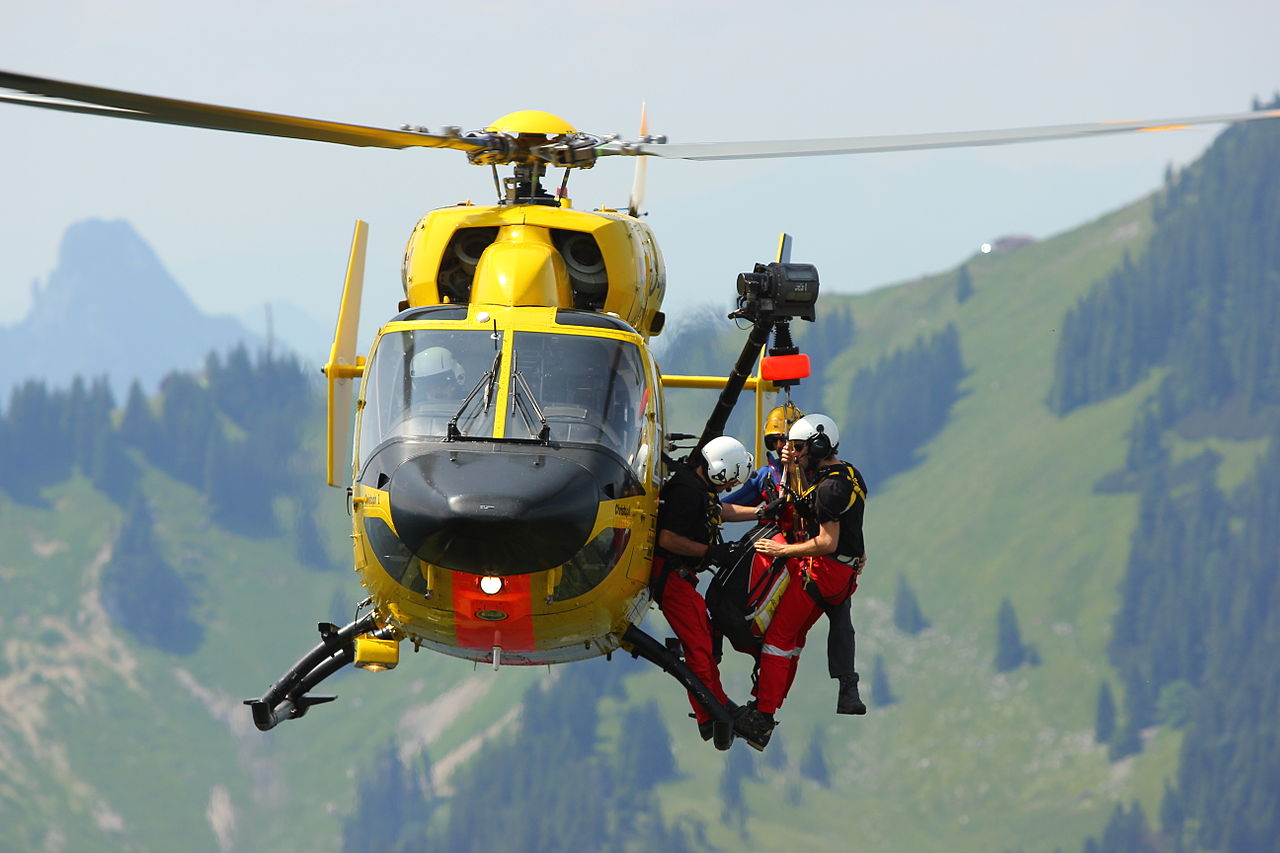
This is the first part when shit hits the fan. Somebody needs to get out there and get you off the mountain. Possible costs are charges for helicopters, ambulances and any kind of search. - Medical Expenses
This is everything once you get into the ER and thereafter. Normally this can get VERY pricey if you're not covered. Think about MRIs, extensive surgery and intensive care. These things can rack up tens of thousands of dollars bills in no time. - Medevac
Let's hope you don't need this but there's always a possibility that your recovery takes a long time. In this case it could mean you'll need an air ambulance flying you home and unless first class airfares are something you just pay and don't look at, you can't afford an air ambulance.
.jpg/1280px-Helikopter-Crews_trainieren_mit_Bergrettung_(32586996636).jpg)
One of the standard approaches is to find an Australian insurance company however after a a bit of digging and checking product comparisons, you'll see this is almost useless. A lot of companies exclude the use of ropes and climbing equipment, require it to be a guided tour, need you to stay on established slopes and don't venture into the back-country. E.g. I requested a quote for a three weeks self-guided trip to the European Alps from insurance4less and that came in at $554.47. Ouch! So you can get insurance but it's not cheap ... if you buy local.

My advice: Don't buy local ¯\_(ツ)_/¯
Sorry dear Australian brokers and insurers but your products are shit. There are a lot of foreign insurers who are less restrictive. Let's have a look at some options I was able to google and I'm sure there are more:
- Global Rescue
This isn't an insurance per se. It's a membership which covers SAR but they do that very well. Instead of paying others, they actually have boots on the ground in areas like Nepal who organise your rescue. You can take out an additional travel insurance which covers Medical as well. - GEOS
Similar to Global Rescue they can cover SAR and Medevac. You do need a supported device like a Garmin inReach. You can a lot SAR-bang for your buck but still need to cover your medical. Fun fact: Their definition of expedition is something organised which you aren't doing for fun or leisure. - Alpenverein
The Austrian Alpine Club has a limited insurance which is already included in the standard membership. It covers 25 kEUR for SAR, 10 kEUR for Medical and unlimited Medevac. If you call yourself a mountaineer, climber or back-country lover, you should be a member. Especially since there is a Melbourne chapter. - Allianz.de
The German insurer offers a global travel insurance which covers Medical as well as Medevac and is rather indifferent who's taking it. You can't take the yearly insurance if you're not a German resident, you're limited to one trip of 93 days and things like expeditions are excluded but for 49 EUR this is a sweet deal. Why haven't you heard of this? Because the sing-up form is in German. If you're only going to Europe, you can save two bucks and take up the Incoming Health Insurance which has slightly different T&Cs but they come in English. Careful! SAR is limited to 5000 EUR! - MDT
Similar to Allianz MDT also offers an Incoming Health Insurance which is valid in the same area (EU plus Iceland, Liechtenstein, Norway & Switzerland). Again Medical as well as Medevac is covered and SAR is limited to 5000 EUR. The big catch is that everything is in German ... but they're cheaper: A three week family trip set's me back 67 EUR. - HanseMerkur
Another German insurer which offers Medical and Medevac with limited SAR cost cover (5000 EUR). After reading the T&Cs - which are available in English - I could not find any limitations or exclusions related to climbing or back-country activities.

I'm very confident if you dig a bit further you'll find more foreign insurances which cover Aussie adventurers especially if you bother to check other EU countries. In any case you should sign up with the Austrian Alpine Club because their club-insurance covers the minor mishaps.
What about Expeditions?
Most policies I could find explicitly exclude expeditions and peaks above 6000m. However this shouldn't be an excuse to just wing it and head off without insurance while hoping for the best. The German HanseMerkur has no reference to expeditions and that's worth asking if they cover it. The German Allianz indicates in their PDS that they might agree to insure expeditions at most likely a higher premium. Both definitely insure Australian residents.
See? There are options! At the bare minimum you should now understand the difference between SAR, Medical and Medevac and that the bloody fine-print hides a lot of pitfalls.
Feel free to have a beer so your head stops spinning 🍻 Cheers
Philipp


