Showing posts with label mountaineering. Show all posts

Saturday, 26 October 2019

Alpine Club Melbourne

YAASSS! 💓🏔

We're stoked to announce that the Alpenverein Melbourne / Alpine Club Melbourne is a thing now! Last year we started this adventure and this month we put the final pieces together. The club is registered, has an ABN and is officially part of the Austrian Alpine Club and therefore also the wider Club Arc Alpine and UIAA family. 


We've come a long way and it's always good to remember why we started this in the first place. Most of us are one way or the other a member of the Austrian Alpine Club since it comes with the awesome Alpenverein Worldwide Service (insurance for SAR, limited medical and unlimited repatriation).

"We're already paying anyway with no local benefits so let's make it an Australian thing."

Top of Ama Dablam with
Cho Oyu in the back
That was the initial idea and soon we realised there isn't a real Alpine Club either - something which needed to be changed :)

  • Having a true Melbournian Alpine Club encompassing all mountain activities
  • Providing a great insurance under the umbrella of the Austrian Alpine Club
  • Bringing adventurers together with local trips and events

The Alpenverein Melbourne is an all-ages, all-inclusive club which does a baby-hike in Plenty Gorge as well as expeditions to high altitude peaks. Now while you can do the baby-hike on short notice, you can't do the same for major peaks in the Himalayas, Alaska or the Andes. The club is committed to provide a pathway for mountaineers to grow and achieve their long-term goal.

Diving into the mountaineering world can be a bit daunting and especially since Australia is lacking the big mountains and glaciers although we do have some great training grounds. There's plenty of knowledge across the member so joining the club gives you an opportunity to tap into that.

Cheers
Anna, Emil & Philipp


Find out more at


Glossary

AVM - Alpenverein Melbourne - Alpine Club Melbourne

AAC (UK) - Austrian Alpine Club (UK)
AVS - Alpenverein Südtirol - South Tyrolean Alpine Club
CAA - Club Arc Alpine
DAV - Deutscher Alpenverein - German Alpine Club
FFCAM - Fédération française des clubs alpins et de montagne - French Federation of Alpine and Mountain Clubs
OeAV - Österreichischer Alpenverein - Austrian Alpine Club
SAC - Swiss Alpine Club

FAQs

Here are the updated FAQs about the Alpenverein Melbourne (AVM) from the previous blog-post. Please drop the club a line if you can't find the answer you're looking for: adventures@alpenverein.melbourne
  • Does the insurance cover trips here in Australia? 
    Yes. Absolutely. It's actually worldwide. You'll find more general information here. There's also a specific article which looks at insurances from an Australian point of view.
  • Is the insurance any different to the one of other sections of the Austrian Alpine Club (OeAV)?
    No - all sections and groups of the OeAV have the very same insurance. Insurance-wise it doesn't matter if you're a member of the AAC (UK), the Section Vienna or the Alpenverein Melbourne. 
  • Does the insurance include other leisure activities?
    Yes. All leisure activities in general are included. However there are some exclusions like paragliding, high altitude mountaineering (above 6000m) or arctic expeditions. 
  • Does the insurance cover backcountry, side country, off-piste, ski-touring or other out-of bonds adventures?
    Yes. All of them.
  • Why wasn't the AVM initiated as part of the German (DAV), French (FFCAM) or South Tyrolean (AVS) Alpine Club or any other alpine club?  
  • Simple: The Insurance of the Austrian Alpine Club (OeAV) is better for Australian based activities
  • Why is it Melbourne and not the Australian Alpine Club? 
    The Australian Alpine Club already exists but has a strong focus on snow sports. Mountaineering and Alpine Adventures aren't something the AAC does. On the other hand the names Alpine Club Melbourne or Alpenverein Melbourne have not been used prior to the AVM.
  • How does the AVM fit into the Victorian Club Landscape?
    The club has the mandate to establish and maintain relationships with similar or the same goals. While building our membership base we're also facilitation cross-club events and create new partnerships
  • Can I join without becoming an OeAV member?
    No. The Alpenverein Melbourne is a local group of the Alpenverein Österreich - Sektion Innsbruck. If you join the AVM you're joining the OeAV.
  • Can I join if I'm already member of another OeAV section?
    Unfortunately not. You'll need to switch to the Section Innsbruck in order to become a member of the AVM.
  • Is the Alpenverein Melbourne incorporated in Australia?Yes - we are registered with Consumer Affairs Victoria. The registration number is A0107950D. The ABN is 93 853 885 730
  • How is the Alpenverein Melbourne be structured?
    It's not much different from any other club you know. There are club rules, a committee and there are club events.
  • What is the structure within the OeAV?
    The OeAV is made out of 197 independent member-clubs - so-called sections. One of them is the Section Innsbruck. The AVM is a local group within Section Innsbruck. See the diagram below.
  • Why Innsbruck - why not any other section?
    This is the biggest section within the OeAV and we thought it might be hard getting this off the ground with smaller sections. We got and we still get a lot of support from Innsbruck so we think we made the right choice.
  • Why do we use the German "Alpenverein" instead of "Alpine Club"?
    We're simply sticking with the Corporate Design Manual of the club. Even the pommies with their British Section couldn't escape that. Besides we do have some German native speakers as members.
  • What do we do about the language barrier when we need to communicate with Austria?
    The current AVM Secretary is a German and the English of the guys in Austria is also pretty good.
  • How much does the Membership cost?
    The prices for 2020 are:
    Individual € 78
    Family € 132*
    Senior € 64
    *Children are free if all parents (single or couple) are members of the same sections and the children are insured too. 
  • For which time-frame do I sign up?
    In general you're singing up for the calendar year however there's a spring special every year. If you join after the 1st September, you'll get the remaining year for free and just pay for next year.
  • Are there any local club trips?
    Absolutely. They are listed on the club's website.
  • Where can I sign up?Right here - Registration Form - click on the link and on the upper right is the Union Jack to change the form to English.

Simplified Structure of the OeAV


Friday, 30 August 2019

A New Dawn - Climbing Clubs in Victoria


I'm not talking about a Star Wars novel but - you guessed it - climbing! There has been an awful lot of noise around the access issues at Gariwerd (aka the Grampians), clubs and climbing associations. Right. Get a cup of tea and strap in.

Let's face it: Currently the climbing community is divided over this issue. On the one hand you have the climbing clubs and on the other hand you have the ACAV.

For the normal climber this might be a bit confusing so I'll take a closer look and show you in which organisational direction this might lead the climbing community of Victoria. Without a doubt the current situation will not only change how we approach future access issues but also the organisational structure of climbing clubs in general.

  • Why is this happening?
  • Who are the involved parties?
  • Where is this going?
  • What's happening next?

VCC Self-Rescue Course
Now before we start you need to understand that Mountaineering Melbourne is a private blog about alpine sports in Victoria. It's run by Anna and me. We're both involved, affiliated with and members of various clubs and businesses. The two most prolific ones are the Victorian Climbing Club (Anna is a long-time trip leader, I'm the VP) and the Alpenverein Melbourne (we're both founding members). We also have good relationships with committee members of other clubs like the MUMC, Sport Climbing Victoria, Outdoors Victoria, Mountain Sports Collective, LUMC and Climbing QTs. This post is obviously not impartial and it also doesn't necessarily reflect the positions of the clubs mentioned above. 

Righty-o. Let's dive into it.

Why is this happening?

You can read up on the history of climbing access in Gariwerd from 1999 up until November 2018 in this Vertical Life article. Shortly after that in February 2019 Parks Victoria dropped the bombshell and announced that they're closing climbing at eight "focus sites" and they made various misleading statement about Special Protection Areas (SPAs) in the following weeks. By now we know climbing in SPAs isn't allowed either and they cover a lot of active climbing sites. The only exception is that Licensed Tour Operators (LTOs) are allowed to climb in parts of Summer Day Valley under a licensing scheme. 

Let's rewind a little bit - back to 2003 to be precise: That's when the current Management Plan for Gariwerd came into effect and that was pretty much badly crafted. It holds a couple of inconsistencies regarding climbing: 
  • "further stabilise access to the base of climbs at Summerday Valley" (6.7) and then states in Table 3 that rock climbing isn't allowed in SPAs. Summerday Valley is and has always been a SPA. Something isn't matching up here.
  • Another one is that Table 3 says far less than 1% of the park are SPAs but then Figure 2 - Management Zones shows SPAs already occupied wide areas of the Park. In the meantime a couple of SPAs were added and if you look at the map which Save Grampians Climbing created, you see immediately that this 1% was never true to begin with. 
This means that Parks Victoria had the tools to shut down climbing since 2003 but chose not to do that. On the contrary it encouraged climbing by adding infrastructure and working with the climbing community on access and environmental projects. 

Something obviously changed! 

This is a very crucial piece of information which is missing in the whole conversation. There's a lot of chatter on how these closures were determined and if due process was followed however the actual motivation gives us a much better understanding why this is happening. Which change of legislation could have sparked this? This one comes to mind: The Aboriginal Heritage Act 2006 and the Aboriginal Heritage Regulations 2018 which has a legal implication towards Parks Victoria and therefore triggered a review of the park management and that exposed some conflicts: Parks Victoria is liable for Aboriginal Heritage Sites on the land they manage, actions needed to be taken. Climbing sites and Aboriginal Heritage Sites directly on top of each other aren't a great idea and can lead to some serious repercussions for PV by Aboriginal Victoria - we're talking about big fines here.
Gariwerd
What followed was something I'd call a Trauerspiel and a sequence of missed opportunities. It solved the immediate threat of damaged Aboriginal Heritage Sites - which is without a doubt absolutely necessary - and fired up climbing community at the same time. Most likely there would have been a better approach but not everyone within PV understands climbing or even likes climbers. 
Anyway. Water under the bridge - let's move on to the next point ... well some never moved on but I'll get to that.

Who are the involved parties?

I mentioned it before that this isn't simply a case of Parks Victoria and climbers. There are A LOT of parties, groups and stakeholders involved. The 2003 Management Plan lists a bunch of key groups who were consulted so let's start with them. I went through the list and tried to find these groups and put down the new names in case they changed names. 
Yep that's 23 groups however not all of them are related to the climbing bans therefore this list needs a tidy up. A couple of groups need to be chopped and some new organisations get added:

I made a little graphic to show you how convoluted the whole club landscape actually is. If we would be in Germany, Switzerland or Austria everything in the box "Current Associations" would be one club - the respective Alpine Club of the country.

... but we aren't in Europe and we got a diverse range of clubs and associations ¯\_(ツ)_/¯

Uni Clubs

These clubs have obviously a younger but quite extensive membership base and are governed by the universities they belong to. However young doesn't mean without heritage e.g. the MUMC has been around for over 75 years. All of them are Associate Clubs of Bushwalking Victoria (BWV) which provides the members an avenue to become an active Bush Search and Rescue (BSAR) member.

Climbing Clubs

In a broad sense these are the standard climbing and adventure clubs:
Of course, there are also a bunch of facebook and meetup groups however they generally lack a democratic structure and aren't incorporated hence why I took the liberty to cut them out. 
Alpenverein Members on a recent trip on top of Mont Blanc

Special Interest Clubs

The thing these organisations have in common is that they have their little niche purpose. There might be still an overlap with other clubs' purpose and objectives.
  • Alpine SAR Victoria (alpineSAR)
    They are an experienced group of backcountry skiers, mountaineers and hikers skilled in search and rescue who. They are an associate club with BWV / BSAR and organise regular SAR trainings for their members.
  • Mount Bogong Club (MtBC)
    This is probably the leanest set-up of a club you'll ever find and the dream of every management consultant working in the field of process improvement. They take care of the historic Cleve Cole Hut and the track network around Mt Bogong.
  • Mountain Sports Collective (MSC)
    The MSC is an Australian Backcountry User Group. Their mission is backcountry safety and among other things they issue Avalanche Bulletins.

Access and Environmental Groups

Most of you know that I'm not a big fan of stacking access organisations and overlapping fields of work. In the past you had Crag Care in NSW, the ACAQ in QLD and here in Victoria it was always CliffCare. Anyway - these groups purely focus on climbing access and the advocacy activities related to it. 
  • Australian Climbing Association Victoria (ACAV)
    A brand new club and a spin-off from the Queensland ACAQ. This basically a climbing access fund which means there is a lot of overlap with activities of the Victorian Climbing Club and this has created a lot of friction within the climbing community.
  • CliffCare
    This access and environmental arm of the VCC was set up in 1998. CliffCare takes the lead when it comes to taking care of the environment in which we climb. The main task of Access and Environment Officer employed by CliffCare are:
      1. Education – promoting ‘low impact’ climbing
      2. Advocacy – negotiating with land managers to maintain access and re-open popular cliffs
      3. Protection – organising work parties and raising money to preserve the cliff environment
    In short, it’s about taking responsibility and looking after the places we love and love to climb at.
  • Gariwerd Access Working Group (GAWG)
    This group supports the A&E Officer of CliffCare was initiated by the VCC to focus specifically on the closures in Gariwerd. In order to quickly respond the bans, VCC/CliffCare selected volunteer members of the climbing community with critical skills. The team is made up of media specialists, lawyers, cultural heritage experts, long term climbers, guides, technology specialists, education specialists and administrative support. 
Now although ACAV and CliffCare/GAWG aren't organised under one roof, it doesn't mean this can't work. There are three main aspects how you can tackle climbing access:
  1. Challenging current legislation and lobby for change of rules and law.
  2. Question and challenge decisions made under current legislation - however if you're successful with that, nobody can stop the land-manager to revisit that decision and follow due process the second time around. 
  3. Collaboration, community engagement and advocacy. 
All three approaches have their merits and while one entity can focus one or two aspects of the above approaches, the other can tackle the other pathway(s). You just have to talk to each other and make sure this isn't overlapping.

Blogs and Magazines

This is again not a comprehensive list - in fact it's rather short and arbitrary. I'm just adding them so you are aware how they are related to the other organisations.
  • Vertical Life
    VL is a nice magazine with good articles and great local information. The two makers Ross and Simon are members of some clubs which isn't surprising since they have been around for a while
  • Save the Grampians
    Goshen, Neil and Mike set-up this blog immediately after the bans to purely focus on the ongoing access situation in a tabloid style of writing. Mike is the current ACAV president and Goshen a committee member. Neil isn't an ACAV member[C].
  • Mountain Journal
    This is a great blog about the Australian Alps. Unless you're a backcountry lover you probably never heard about it. The articles very informative and far away from what I'd call tabloid-style. Cam is a founding member of the Mountain Sports Collective.
  • Mountaineering Melbourne
    This is the site you're currently on and also the one with the least reach - by far ... but somehow you're reading this ¯\_(ツ)_/¯

Where is this going?

The club landscape has already been fragmented before the recent access crisis and since then it didn't get any better. Phil Goebel - President of Sport Climbing Victoria - wrote an open letter explaining why we have to do the exact opposite: We need to unify the climbing community. I think he's right because it gives climbers, mountaineers, alpinists and backcountry lovers a stronger voice.

It also creates a governance structure with beneficial synergy effects and the opportunity for more funding. The Victorian State Government is very supportive of the idea since studies have shown that climbing and affiliated activities - everything instagram-able - are only increasing. It needs to be noted that nobody has reliable numbers on how much rock climbing is growing in Victoria and that includes Parks Victoria. Having a State Recreation Organisation would help manage that in a positive way for climbers. Other outdoor user groups like paddlers, hikers and four-wheel drivers have done that before and in each instance it was quite successful.

Let me walk you through how this unified Climbing Federation could look like*. If you're familiar with the European Alpine Clubs, you'll realise the model is quite similar.

*We made this chart based on slides which have been shared with the founding council of the Climbing Federation. Again: It doesn't reflect an official standpoint of any involved organisations and simply shows how Anna and I think this might pan out.

State Recreation Organisation

What is that? An SRO is basically a recognised organisation active in the sport and recreation sector however does not govern a sport in the way a State Sporting Association (SSA) does. The SSA for climbing is Sport Climbing Victoria. Both SRO and SSA can apply for state funding which is pretty cool. You'll find more information on the SRV website.

Membership

If you're a member of a club who's part of the Climbing Federation, you're a member of the whole thing. However some details still need to be worked out e.g. are you a member of SRO and SSA or are there levels of membership? Also not everyone wants to be part of a club and therefore can be an avenue for individual members be created?

Now over 45000 Victorians are self-identified climbers and most of them aren't members of any club. Also not every club wants to become a member of the Climbing Federation. For some it simply doesn't make sense e.g. NZAC Australia is a country-wide club and affiliating with a state organisation might not be appropriate. Once there is a national body, that idea might be worth revisiting. Or the Mount Bogong Club is interested in a lean set-up and therefore doesn't want to deal with the administrative burden. It's important that the Climbing Federation seeks the feedback and input from those climbers and clubs who aren't members as well.

Governance and Money

Climbing in Summerday Valley
This is a blank canvas. Obviously there will be an AGM and at that occasion the board / committee will be elected. However is every club-member invited to this AGM or do the clubs send delegates? How does the whole thing get financed? Is there a fee per club based on size or per individual? Are there discounts? There are a lot of questions and the job of the founding council is to figure them out.

Competition Climbing

Obviously this would be governed as per usual by the SCV except there could be a natural progression from all clubs into the competition world which would mean a great opportunity for more athletes. 

Name Finding and Branding

You see a lot of names thrown around: Climbing Federation, Mountain Activities Victoria, Victorian Climbing Council and so on. What has been decided is that we need community input to find one but that's not really a worry at the moment. My impression is that those who are working on this idea don't have strong feelings about the branding. For now I'll just stick with Climbing Federation in this post.

Access and Environment

This is where things get interesting.

The ACAV is a new kid on the block and they already got a large membership base. They announced their formation at the Natimuk Goatfest in a manner which can only described as controversial[1]. The GAWG was holding a town-hall meeting there to answer questions and got a bit under attack for volunteering their time and working on this access situation.

It's not exactly a secret that the ACAV was mainly formed because their founding members thought the VCC / CliffCare / GAWG wasn't aggressive enough towards Parks Victoria. As mentioned above under "Who are the involved parties? > Access and Environmental Groups" this doesn't mean it's impossible to make it work. A good cop / bad cop approach is something reasonable however the cops need to work together and this is where we're falling short. There are ongoing conversations but no joined strategy.

The ACAV is reasonably good at their PR game. Bundled with a cheap membership fee it's unsurprising that they have grown fast. Unfortunately they promise a lot and don't have any issues bending the truth a bit. Let me give you a couple of examples:
  • Mike Tomkins (President) claimed the ACAV was at the first pub meeting of the Founding Council on 13.5.2019. They weren't. I know. Mountaineering Melbourne hosted that meeting. 
  • The ACAV claimed "When the Founding Council becomes a real entity in 2020, ACAV will become the access arm of this new body.". Well this hasn't been decided yet given the final structure hasn't been agreed upon as more consultation across Victoria is planned, and the ACAV hasn't even signed the Memorandum of Understanding. Their statement is "As an access organisation, our legal constitution is tightly focused. Hence we cannot sign up to an agreement with a proposed governing body without reviewing the proposed constitution of that organisation." Given they got lawyers in their committee it's a bit surprising that they think they can't sign a MoU which in fact is legally non-binding. Therefore the only logical explanation is that they disagree in parts or with the whole content of the MoU. You'll find the MoU here on the VCC page.
  • There's the claim that nobody in the other climbing clubs voted in favour of the Founding Council. Well - the committee members of the involved clubs somehow got voted into their role, right? Isn't this how representative democracy works? Also if this thing gets off the ground, I'm pretty sure there will be a members' vote at each AGM to finalise any affiliation ... or not. 
  • Mike Tomkins is repeatedly emphasising how transparent the ACAV is however when they decided to complete a heritage submission with Heritage Victoria which aims to register rock climbing as a heritage activity at Djurite (Arapiles), they didn't consult any of the other clubs or their membership base. I leave it to your imagination how Traditional Owners could react to this.
    The ACAV is also preparing a Climbing Management Plan but haven't shared any of the drafts. Transparent is something else. 
These are some examples which have led to an increasingly erosion of trust between the ACAV and other clubs. Now the obvious and underlying question is why is there all this infighting going on?

Currently CliffCare is sitting under the VCC however there's the idea to simply lift it up under the roof of the Climbing Federation. On the surface it would make sense given you don't have to re-invent the wheel since CliffCare is a legal entity and therefore it this would avoid a lot of administrative set-up headaches.

However

That would also mean the new formed climbing peak body - The Climbing Federation - has an access and environment arm and where would that leave the ACAV? And even if the ACAV acquires CliffCare and becomes the A&E arm of the Climbing Federation, there's still a board and a committee above them. This would not be an independent body.

The bottom line is that if the Climbing Federation gets formed, the operation of ACAV will be forced to change. If you've invested all this time in getting the ACAV up and running, you don't want to see it become dependent or even obsolete within a couple of months because something else popped up. In my opinion that's the reason why Mike Tomkins and other ACAV members try to discredit the concept of the Climbing Federation.

Other Topics

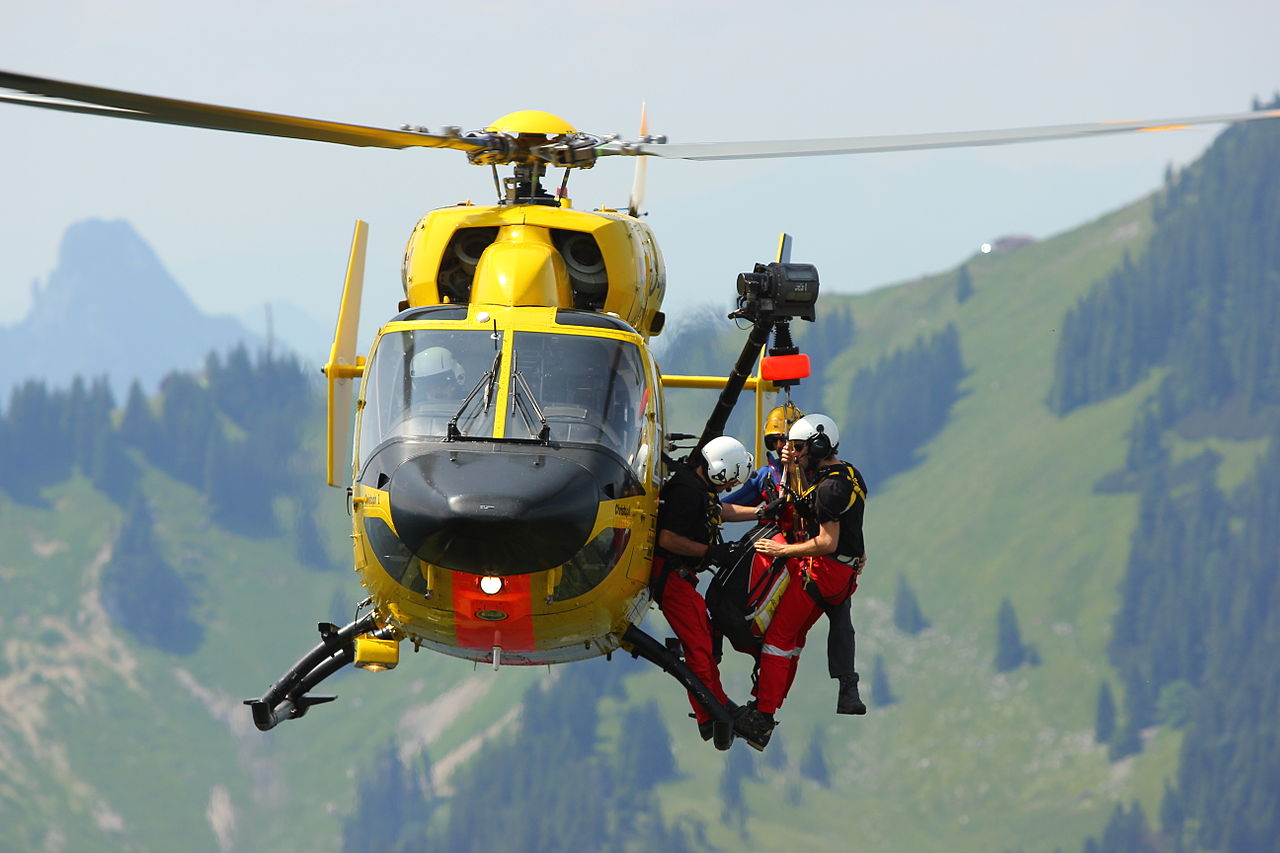
Rescue Helicopter over the Razorback 
This is something which falls under the table in the heated debate of rock climbing access. A climbing Federation would also cover things like safety standard, diversity, search & rescue or backcountry access. Yes I understand that a lot of climbers couldn't care less about these things but when you get woken up at 5 am by an rescue chopper hovering 20m above your tent, you realise how ridiculously stupid the notion is that backcountry safety should be put on the bench over some access issue.
Especially when you piece together what happened and realised you weren't far from a potential fatality. I'm with Phil Goebel on this: If we're doing this, let's do it the right way. We need to look at best practice organisations which are the Alpine Clubs and don't make this an one-trick-access-pony.

Future of the Climbing Federation

As you can see the idea and the drafts of the Climbing Federation have merits and a solid foundation. I am confident that it will happen one way or the other and whether some clubs decide not to be part of it, might influence the structure but not the overall outcome. E.g. Alpine SAR Victoria already said they want to be kept in the loop but probably won't affiliate.
The whole set-up around Access & Environment and the connected fields like Education is obviously messy and needs to be resolved.


What's next regarding the
Gariwerd access situation?

Right. I touched on the whole access issues so many times, I might as well give you an update on this as well. There are a couple of things which are happening at the moment. Let's revisit the three access approaches:
  1. Challenging current legislation and lobby for change of rules and law.
  2. Question and challenge decisions made under current legislation - however if you're successful with that, nobody can stop the land-manager to revisit that decision and follow due process the second time around. 
  3. Collaboration, community engagement and advocacy. 

Lobbying for change of legislation

I haven't seen any true action on lobbying for change of legislation so let's move on.

Legally challenge decisions under current legislation

The VCC has an ongoing legal interaction with Parks Victoria. Currently they are in the process of mediating however there is still the option to seek litigation. The case is around the VCC’s request for reasons in relation to the recent climbing bans in Gariwerd. Yes that's not a typo - it's the VCC and not the ACAV.

Collaboration, community engagement and advocacy

There are a couple of ongoing consultations about the Grampians Landscape Management Plan Review It's not that complicated from a climber's perspective:
  • First is the Stakeholder Reference Group aka SRG. Every "sector" gets invited by ParksVic and sends a representative. For the climbers one of the oldest clubs - The Victorian Climbing Club - got invited and the VCC gets backed by the clubs who are in the process of founding the Climbing Federation[2]. The SRG had one meeting so far.
  • Second is a climbing round table. Every climbing, backcountry and mountaineering club you can think of got invited to this one. There was one meeting so far and the Alpenverein Melbourne posted a brief article on their website. The next meeting will be at the end of September / beginning of October.
  • Third are the community consultations which are open to everyone. They are starting in September and if you're passionate about climbing in Gariwerd, you should attend one of the workshops. You should register for these at engage.vic.gov.au/grampians-management-plan

See :) Pretty simple. Ok, these are the main ones. There are also a lot of direct initiatives of clubs, CliffCare and the GAWG but it'd be too much to get into these here.

Traditional Owners

Congratulations: you made it this far! I know it's a long post. Above you could read as much: "Climbers, climbers, climbers, Parks Vic, climbers, climbers, Parks Vic, climbers, Parks Vic"
The reality is that Parks Victoria probably doesn't have too much of a say about climbing access. The Traditional Owners have. This access situation isn't about a rare flower or a nesting falcon. It's about Aboriginal Heritage. It is really important to form this relationship and there is one important thing to understand:

Your white-people's expectations don't work.
This isn't your country and this isn't your culture. 

German winepress built 1704 [3]
We are so used to engaging with other groups, people and organisations in a certain way that we're usually pretty lost when this isn't the right way. You should not try to force the processes you're used to on Traditional Owners. This is doomed to fail. Engaging the right way takes time - time some impatient climbers unfortunately don't seem to have.

I am as German as you can be with a family-tree which would bring right-wing idiots to tears due to envy because it dates back to fifteen-hundred-something. I grew up in the heart of Germany, I learned a lot about my country and my own history, I served and I still feel this strong connection to the land which is encompassed in the German word "Heimat". I believe this feeling is similar to the connection the Traditional Owners have to their country. There are millennia of history. Now if I imagine someone would tell me that German culture isn't that important and has to stand back for something which hasn't been around for even a century, I'd slap them with the collected works of Goethe, Schiller, Heine, Brecht and Grimm. If you'd try to learn about my culture and understand the things which are important to me and my family, that'd be a very different conversation.

I've lived on three continents and what I've taken away from a lot of travelling and being exposed to non-western cultures is that you need to understand your host's culture before you even consider aiming for any achievements. Ideally along this process you'll adjust your goals because you understand; you know this is or isn't right.

This is the journey we as a climbing community have just started. Unfortunately there are some who already struggle with the fact that only other climbers have other value systems and priorities, let alone someone from a completely different background. Should we put the access negotiation in the hands of these struggling climbers or leave it in the hands of well-established organisations like the VCC, CliffCare, Outdoors Victoria, Sport Climbing Victoria and the future Climbing Federation? Whom do you trust more to treat Traditional Owners with respect, not force our white-people's processes upon them and show an honest interest in their history?

Thanks for reading this.

Cheers 🍻
Philipp 

Matt walking into Summerday Valley


[1] ACAV members standing up and demonstratively turning their back towards the stage and the GAWG guys. 

[2] The ACAV is trying to take the seat on the SRG from the VCC in order to presumably achieve recognition by an external organisation. Parks Victoria has already turned this down.  

[3] You'll find it at the Schloss Johannisberg winery which is 900 years old. Riesling and late harvest wine were "invented" at this very winery. This is just one example of a tiny thing in Europe being much older than white Australia. 

[C] CORRECTION 05.09.2019 - In a previous version I've stated that Neil is an ACAV member. He is not. 


Tuesday, 13 August 2019

Mont Blanc 2019

"Mountaineering in Europe is so ... civilised"
Once upon a time a Kiwi claimed New Zealand has the best mountain huts in the world. After I recovered from a hysterical attack of uncontrolled laughter, I got back up from the floor, wiped off the dust and asked that mistaken individual whether he had been to Europe. He had not. I explained to him that this what he calls a hut, Europeans call a bivy-box.   

Refuge du Goûter
Now if you've never climbed or hiked in Europe, I'm putting it straight out there: You're missing out. It's one of the better things since sliced bread because it comes with pastry and wine. My profound love for the mountains can be traced back over twenty years ago when I first rocked up at Les Houches to climb Mont Blanc. It was not only the first major peak I ever climbed, it was also a life-changing moment and the beginning of an ongoing passion - Mountaineering. I had no idea that a stupid idea brewed up over too many drinks in a pub on Christmas Eve 1998 will condemn me to this lifestyle. 

But let's step back a little bit. In general Australians who mountaineer tend to hop over the ditch or head straight for the Himalayas before even considering the Western Alps. On the surface that makes sense since the Kiwi Alps and Nepal are simply closer however there are a bunch of things which speak for climbing in Europe:
  • Accessibility
  • Information about routes and conditions 
  • Weather Stability
  • Rescue Services
  • On-mountain accommodation
  • Off-mountain activities
  • ... and of course: Food, Wine, Beer & Cheese. If you believe the Swiss, Germans, Austrians, French and Italians don't have these essentials covered, there's something seriously wrong with you.
Of course none of that crossed my mind back then in 1999 since I was living in Munich and the biggest mountain around was simply Mont Blanc. And this is why Dirk, Peter, Stefan and I decided to tackle this "little hill" without any climbing let alone mountaineering experience. Yeah, what could possibly go wrong? That's a whole story in itself but obviously the four of us are still alive and let me tell you this: It was a steep learning curve with a lot of close calls. However that didn't distract from the beauty of the mountains and the sense that we can and want to do this more often. Eventually we did a technical mountaineering course (TMC) and learned how to do these things without giving our parents a heart-attack.

Now instead of boring you with tales of our climbs last month ... and in the years before ... I'll give you a bunch helpful pointers to get cracking at your personal Mont Blanc and European alpine adventure.

Acclimatisation Hike

Refuge du Fond d'Aussois
You're in the Western French Alps. They are amazing so why not make use of a good hike to get your body used to a bit thinner air. Recently we found a gem you really do not want to miss: The Tour des Glaciers de la Vanoise. It's epic. We did a short circuit over four days with a baby and it was one of the best hikes I've done in my life. In fact I've done the Routeburn in perfect weather and this is simply better - I know this is a big call. The Tour isn't as crowded as the Tour du Mont Blanc, stays higher - always above 2000m - and you can pick a couple of variations which means you can adjust this to your schedule. If you're keen, you also have the option to sneak in a climb of the Dôme de l'Arpont 3599m but you need a bit of gear for this.

The huts are all fully catered which means you're only taking a small pack with some food for the day, change of clothes and sleeping liner. You can get a lunch box for the next day, beer, wine and sometimes a shower. Yeah I know - how civilised!

Now flip through a couple of pics and then I'll tell you a bit more about Chamonix and climbing.

Pointe de l'Échelle reflection


Above Sardières

Ruisseau de Pingon

Beer on tap @ Refuge de l'Arpont

Fun afternoon at the hut

Marmots - the little hearts of the mountains

Not so shy chamois

Blue butterflies

Looking at Monte Pelve

Gentiana aka Enzian

Grandpa Ibex
Do you feel like hopping on a plane yet? Great, let's get a bit more into the logistics:

Where to set up camp

If you want to climb around Mont Blanc, you got a couple of places where you can stay. There are some camp grounds, you can rent a chalet or simply check into one of the hotels or B&Bs. Chamonix, Les Houches, Argentière and Saint Gervais les Bains are all villages you should consider. Obviously Chamonix is the hub of all mountain activities but that shouldn't stop you from looking a bit further. There's also the Italian side of the mountain however that's more for advanced mountaineers unless you're aiming for Grand Paradiso which is one of the easiest 4000m peaks you can climb.

Now back to France our personal favourite is Saint Gervais les Bains which is the village where the Tramway du Mont Blanc starts its climb up the mountain. It has a fucking cute village square which hosts two markets per week and a free car park right next to it. There's a climbing wall hidden under the big bridge (think Burnley but lead-climbing), there are plenty of shops to get your cured meat and cheese kick, heaps of bistros & restaurants and the icing on the cake is the Boutique Hotel La Feline Blanche - again if you don't love Anne's hospitality there's something wrong with you. 

Ah yes ... the cat is actually a dog and his name is Bob ... but he fulfils the colour-requirement. 

Maison de la Montagne

The House of Dreams
This is special. Chamonix has little cute building called the House of the Mountains. It's basically the office of the local guide association ... however ... it's also a place of the volunteer organisation La Chamoniard to get the latest information about routes and conditions ... for free. Yes! This is a service supported by the local council to keep climbers safe. Are you listening New Zealand?!?!? You can just walk in there and have a lovely chat about your trip intentions with a professional guide or a Gendarme of the PGHM*. They are very forthcoming and provide you with a lot of insight, can advise alternative tours or simply point out some key issues. In the end these guys would also come to your rescue so they want you to be safe. Of course if you decide your objective would be best to achieve with a local guide, you can find one right here.
Also if you don't have a plan yet, the Office de Haute Montagne is filled with folders of topos, maps and 1:10000 model of the Mont Blanc Massive. Here you can dream up an adventure in no time - there are plenty to choose from and all of them are right at your finger tips. 

*Peloton de Gendarmerie de Haute Montagne - French High Altitude Police Rescue Squad. They are absolute professionals. If you get in trouble by not following their advice, you're not getting any sympathy.

Accessibility

The iconic gate at Aiguille du Midi 
You might have gotten the vibe so far: We are not purists. It doesn't need to be the raw wilderness with hideous approaches and self-imposed privations which are borderline to type III fun. While you can walk up the hill - Les Houches to the top of Mont Blanc bears more elevation change than Everest Base Camp to the summit - you can just take various ski lifts, trams or cable cars. In fact the peaks are so accessible that you can do a 4000m peak in a day. Most tours are just a two day trip which means within a week you can easily squeeze in three climbs e.g.
  • Aiguille du Tour 3540m
    Take the gondola and chair-lift in the afternoon and walk leisurely 2h to Albert 1er Hut. Early morning, summit and back down. Booking the hut is essential.
  • Mont Blanc du Tacul 4248m
    This is an easy day-trip from the Aiguille du Midi. Take the earliest cable car you can hop on (reserve one online or rock up at stupid o'clock), out through the iconic gate and off you go. You might need a second ice axe for the ice-fall.
  • Mont Blanc 4810m
    Take the first tram up to Nid d'Aigle, hike up to Refuge du Goûter and get your gear sorted. Very early morning, summit and back down. Again booking the hut is essential. You need one otherwise they will stop you at the Tête Rousse Glacier. The booking opens somewhere around April for the season and normally the hut is booked out within hours however, if you're flexible you can get in on a cancellation as well.
These three peaks would also be my recommendation for medium-level first time visitors. You can also do Mont Blanc du Tacul as a cool-down climb after Mont Blanc and if the ice-fall looks at you with its angry face, turn left and have a beer at the Refuge des Cosmiques instead. 

Bad Weather Alternatives

Unfortunately you can be washed or blown off the mountain and there are options beside going to the climbing gym or disappearing into the void of French cheese, wine and small-good shops. 
  • Les Thermes de Saint-Gervais is worth a trip but keep in mind boardies aren't allowed in French pools >> budgie-smugglers it is.
  • Check out the Musee Alpin de Chamonix or Musée Montagnard, Les Houches. The first one is about alpinism in general and the latter showcases mountain lifestyles of past times.
  • Obviously being a gear-slut, shopping is a great way to pass time and empty your bank account. You won't have any problems finding shops in Chamonix. Think Bogong Equipment on steroids plus all the big brands shops. In case you got wheels also check out Au Vieux Campeur in Sallanches or Decathlon in Passy. Pro-tip: maxing out you baggage allowance on your way to Europe is a mistake
    ... but maybe you should just wash your clothes, stay in the chalet and save some money.
This should give you a starting point and an idea where to begin your European mountaineering adventure. Now it's just about to find a spot in your calendar during the French climbing season, block it and book some flights.

Now if you're still wondering how our 1999 Mont Blanc adventure turned out, you're in luck. I recently recovered a trip report from the depth of the internet and translated it:

How not to start your Mountaineering Career

Yep. I'm also glad that I'm still around ...

Cheers and good luck 🍻
Philipp

This 2019 trip was the first overseas adventure of the Alpenverein Melbourne. If you're an mountaineer or alpine adventurer, this club might be the right thing for you. Check it out at www.alpenverein.melbourne

Friday, 29 March 2019

What is this brand name telling us?


There are about twenty-million outdoor brands on the planet and the reality is their names try to inspire us to see the big adventure ahead ... that sometimes doesn't work out that well 😉 Here are my bad takes on various brand names and the associations they spark.

⚠ Warning! Dad-jokes ahead! 
  • 66° North - Hands down! That's Finnish vodka!
  • Salomon - Careful with your kids. They might get chopped up.
  • Kathmandu - Stinking city which feels like driving Mario Cart on weed.
  • Patagonia - Sometimes it works out really well but most of the time it's windy, rainy, foggy, cold, muddy and miserable.
  • Jack Wolfskin - Dates back to the Celtic tribes who dressed in animal skins served a painful defeat to the Roman Empire at the Battle of the Teutoburg Forest. Not really useful these days.
  • Arc'teryx - Old extinct glorified roasted chicken. Don't confuse it with the mighty bin-chicken - that'd be a hotel chain
  • Mountain Hardware - Are you sure about this? Feels really soft ...
  • Marmot - Awwww the cute little fluffy hearts of the mountains.
  • Icebreaker - Just imagine a Russian captain on the bridge of his nuclear powered vessel having some sips/gulps of 66° North.
  • Berghaus - Some random pommy wanted to sound German-cool and didn't realise we call it Berghütte. #fail
  • Hyperlite Mountain Gear - this is ... surprisingly honest!
  • Quechua - The sound a cane-toad makes when you pitch a tent on top of it (intentionally or not)
I know I know! Terrible. Not funny. I'll see myself out ...

Cheers 😂
Philipp 

Thursday, 24 January 2019

Mountaineering & Climbing Insurance

Disclaimer: I'm neither an insurance broker nor a legal expert. The advice given here might be outdated (I wrote this in January 2019) or simply wrong. You definitely need to read the Product Disclosure Statements, Terms & Conditions and fine print yourself. 

As an Australian resident, travel insurance can be a nightmare when you're heading for an oversea's adventure. Yeah what a bummer - I remember the good old times where I paid 12 EUR via the German Automobile Club (ADAC) and was covered for trips up to 90 days per year with no exclusions! Unfortunately the offers, T&Cs and fine prints seem to change on a weekly basis so you won't find a definite "this is the best" insurance. 

Now let's cover the basics: Which type of trip do we want to insure? We're not talking about gym-climbing or guided trips. This is about self-guided mountaineering and back-country trips.

Where do you need cover?

The location you're heading to makes a huge difference. Europe seems to be simpler. Climbing in Nepal, India and China will trigger elevation limitations as well as expedition restrictions. US and Canada is not impossible to insure although it will be VERY expensive. 

What Do we need to cover?

This is where a lot of people get confused since not all insurances cover all three of these parts:
  • Search and Rescue
    This is the first part when shit hits the fan. Somebody needs to get out there and get you off the mountain. Possible costs are charges for helicopters, ambulances and any kind of search.
  • Medical Expenses
    This is everything once you get into the ER and thereafter. Normally this can get VERY pricey if you're not covered. Think about MRIs, extensive surgery and intensive care. These things can rack up tens of thousands of dollars bills in no time.
  • Medevac
    Let's hope you don't need this but there's always a possibility that your recovery takes a long time. In this case it could mean you'll need an air ambulance flying you home and unless first class airfares are something you just pay and don't look at, you can't afford an air ambulance.
The good news is that it's not hard to insure SAR and Medevac. The bad news is Medical is not so easy because almost all Australian companies exclude Medical if it is caused by a mountaineering  or back-country accident. In a typical scenario you'll get off the mountain but then your life-savings will be eroded. Yes a standard insurance will refuse your medical claim even if they didn't pay for the search and rescue. Again: Reading the PDS, fine print, Terms and Conditions or however it is called is an absolute must!

One of the standard approaches is to find an Australian insurance company however after a a bit of digging and checking product comparisons, you'll see this is almost useless. A lot of companies exclude the use of ropes and climbing equipment, require it to be a guided tour, need you to stay on established slopes and don't venture into the back-country. E.g. I requested a quote for a three weeks self-guided trip to the European Alps from insurance4less and that came in at $554.47. Ouch! So you can get insurance but it's not cheap ... if you buy local.

My advice: Don't buy local ¯\_(ツ)_/¯

Sorry dear Australian brokers and insurers but your products are shit. There are a lot of foreign insurers who are less restrictive. Let's have a look at some options I was able to google and I'm sure there are more:
  • Global Rescue
    This isn't an insurance per se. It's a membership which covers SAR but they do that very well. Instead of paying others, they actually have boots on the ground in areas like Nepal who organise your rescue. You can take out an additional travel insurance which covers Medical as well.
  • GEOS
    Similar to Global Rescue they can cover SAR and Medevac. You do need a supported device like a Garmin inReach. You can a lot SAR-bang for your buck but still need to cover your medical. Fun fact: Their definition of expedition is something organised which you aren't doing for fun or leisure.
  • Alpenverein
    The Austrian Alpine Club has a limited insurance which is already included in the standard membership. It covers 25 kEUR for SAR, 10 kEUR for Medical and unlimited Medevac. If you call yourself a mountaineer, climber or back-country lover, you should be a member. Especially since there is a Melbourne chapter.
  • Allianz.de
    The German insurer offers a global travel insurance which covers Medical as well as Medevac and is rather indifferent who's taking it.  You can't take the yearly insurance if you're not a German resident, you're limited to one trip of 93 days and things like expeditions are excluded but for 49 EUR this is a sweet deal. Why haven't you heard of this? Because the sing-up form is in German. If you're only going to Europe, you can save two bucks and take up the Incoming Health Insurance which has slightly different T&Cs but they come in English. Careful! SAR is limited to 5000 EUR!
  • MDT
    Similar to Allianz MDT also offers an Incoming Health Insurance which is valid in the same area (EU plus Iceland, Liechtenstein, Norway & Switzerland). Again Medical as well as Medevac is covered and SAR is limited to 5000 EUR. The big catch is that everything is in German ... but they're cheaper: A three week family trip set's me back 67 EUR.
  • HanseMerkur
    Another German insurer which offers Medical and Medevac with limited SAR cost cover (5000 EUR). After reading the T&Cs - which are available in English - I could not find any limitations or exclusions related to climbing or back-country activities. 
I'm very confident if you dig a bit further you'll find more foreign insurances which cover Aussie adventurers especially if you bother to check other EU countries. In any case you should sign up with the Austrian Alpine Club because their club-insurance covers the minor mishaps. 

What about Expeditions?

Most policies I could find explicitly exclude expeditions and peaks above 6000m. However this shouldn't be an excuse to just wing it and head off without insurance while hoping for the best. The German HanseMerkur has no reference to expeditions and that's worth asking if they cover it. The German Allianz indicates in their PDS that they might agree to insure expeditions at most likely a higher premium. Both definitely insure Australian residents. 

See? There are options! At the bare minimum you should now understand the difference between SAR, Medical and Medevac and that the bloody fine-print hides a lot of pitfalls. 


Feel free to have a beer so your head stops spinning 🍻 Cheers
Philipp 


Friday, 31 August 2018

Founding the Alpenverein Melbourne

The Idea - Why are we doing this?


Yes you read that correct: We want to found the Alpine Club Melbourne. The plan is to set it up as a local group (Ortsgruppe) within the Austrian Alpine Club (Alpenverein Österreich / OeAV) in order to benefit from a bigger network of European Alpine Clubs. We already reached out to the Section Innsbruck and got some positive feedback. What we now need is founding members and this is where you come in.


If you're a mountaineer, climber, backcountry skier or snowboarder, hiker or simply an adventurer, this might be right up your alleyway. Here are some advantages the Alpenverein Melbourne would bring and why you should join:

  • Insurance 
    This is probably the biggest draw-card. As an Austrian Alpine Club (OeAV) member you benefit from a great insurance. You'll find the details on the OeAV website.
  • Big Adventures 
    Trips to the big mountains are already on the cards. We have Mont Blanc booked in for next year and we intend to continue doing this.
  • Family Friendly 
    Getting children outside is one of the best things you can do. It fosters resilience and self-confidence. As parents we know this can be hard but it's much easier in a group. Don't believe us? Have a look at Emil's recent snow adventure.
  • Melbourne Based 
    Part of the Austrian Alpine Club tradition is to have regular social nights. Sounds good to us.
  • Safety Culture 
    Mountaineering safety culture differs between continental Europe and the Anglo-American mountaineering community. The aim is to tap into the latest safety research of the CAA - Club Arc Alpin - and make use of that here in Australia. 

We know there are other climbing and mountaineering clubs in Victoria but we don't see this as competition. Actually quite the opposite: We're already encouraging joined trips and cross-club activities. 

Now you want to join this adventure? Awesome and welcome aboard! Here is how it works:
  1. Join the Austrian Alpine Club (OeAV) - preferably the Section Innsbruck - if you haven't done so already. If you join after 1st September, you'll get the remainder of the year 2018 for free when paying your 2019 membership fee.
  2. Come back and enter your membership details into the webform
  3. We'll collect the details and once we got a bunch of members, we'll put or application forward to the committee of the Section Innsbruck.

That's it! We hope we sparked your interest and we'll have our local Alpine Club soon. In the meantime join us at the upcoming Mountaineering Social Night At the Clifton Hill Brewpub.

Cheers 🍻
The Valentines

2018 trip to the Dolomites


FAQs

Here are some potential questions you might have. Please drop us a line if you can't find the answer you're looking for: go@mountaineering.me
  • Does the insurance cover trips here in Australia? 
    Yes. Absolutely. It's actually worldwide.
  • What happens next? 
    We'll collect details throughout September and if we get to 15 -20 founding members, we'll submit the list to the committee of the Alpine Club - Section Innsbruck for consideration. If they accept our application we'll be the "Alpenverein Melbourne" as a Regional Group of the Alpine Club - Section Innsbruck.
  • Why not the German Alpine Club (DAV) or any other alpine club? 
    Simple: The Insurance of the OeAV is better for Australia based activities
  • Why not found the Australian Alpine Club? 
    It already exists but has a strong focus on snow sports. Mountaineering and Alpine Adventures aren't something the AAC does.
  • Can I join without becoming an OeAV member?
    No. The Alpenverein Melbourne will be a sub-group of the Alpenverein Österreich - Sektion Innsbruck. Technically you'll be joining the OeAV.
  • Can I join if I'm already member of another OeAV section?
    Yes! Just enter your membership number in the form.
  • Can I join at a later stage?
    You can but if we don't get the numbers this might not happen!
  • Will the Alpenverein Melbourne be incorporated in Australia?
    That isn't planned at this stage since we'll be a subgroup of an Austrian club. If the necessity arises, we can revisit this at a later stage.
  • How will the Alpenverein Melbourne be structured?
    This hasn't been decided yet. That's up to the members who found the group - meaning you :)
  • What would be the structure within the OeAV?
    The OeAV is made out of 197 independent member-clubs so-called sections. One of them is the Section Innsbruck. We'd be a sub-group with in  Alpine Club - Section Innsbruck. See the diagram below.
  • Why Innsbruck - why not any other section?
    This is the biggest section within the OeAV it might be hard getting this off the ground with smaller sections. On top of that we're already members of that section.
  • Why do we use the German "Alpenverein" instead of "Alpine Club"?
    We're simply sticking with the Corporate Design Manual of the club. Even the pommies with their British Section couldn't escape that. Besides we will have some German native speakers as members.
  • What do we do about the language barrier when we need to communicate with Austria?
    Luckily we got some German native speakers among us however the English of the guys in Austria is also pretty good.
  • How much does the Membership cost?
    Individuals € 57, Family € 101, Senior € 44 - All options are on the OeAV website. You can pay with credit card. There won't be additional fees for the local group here in Melbourne.
  • Will there be local club trips?
    Absolutely. That's one of the reasons why we're doing this. We'll also organise regular social nights.
  • What if I join the OeAV and the Alpenverein Melbourne doesn't get off the ground?
    You'll still have the benefits of the OeAV and that includes the insurance. Basically you won't lose anything. 

Simplified Structure of the OeAV